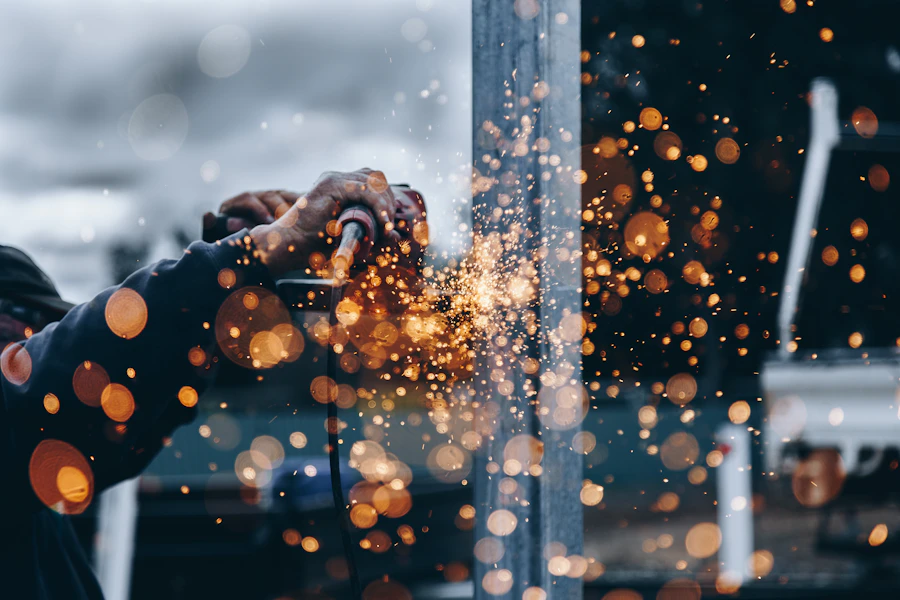
Many DIY enthusiasts often face the challenge of fixing holes in metal surfaces, whether it’s in tools, furniture, or machinery. While welding is a common solution, it may not always be practical for everyone. This guide will explore effective methods to repair metal holes without the need for welding.
Using Epoxy Resin
One of the best alternatives for repairing metal holes without welding is to use epoxy resin. This strong adhesive can bond metals and fill gaps effectively. Here’s how to do it:
Clean the area around the hole thoroughly, removing any rust and debris.
Mix the epoxy resin according to the manufacturer’s instructions.
Apply the mixture over the hole, ensuring it fills the cavity completely.
Let it cure for the recommended time to achieve maximum strength.
Utilizing Metal Patching Tape
Another simple and quick fix is using metal patching tape. This product is specifically designed for small repairs and can withstand various elements. Follow these steps:
Clean and dry the area surrounding the hole before applying the tape.
Cut a piece of patching tape that adequately covers the hole.
Press the tape firmly onto the metal surface, ensuring no air bubbles are trapped underneath.
For added security, apply a layer of sealant around the edges once the tape is in place.
Conclusion
Repairing a hole in metal without welding is achievable with the right materials and techniques. Whether you opt for epoxy resin or metal patching tape, ensure you follow the instructions carefully for a durable repair. This knowledge can save both time and resources, allowing any DIYer to tackle metal repairs with confidence.
Metal glue, often referred to as adhesive bonding, is a popular option for joining metal pieces. This type of glue is designed to create a strong bond between metals by chemically reacting with the surfaces. The primary components of metal glues include epoxy, cyanoacrylate, and polyurethane. These adhesives can form a robust connection without the need for heat or additional tools, making them accessible for DIY enthusiasts.
The Strength of Welding
Welding, in contrast, is a process that joins metals by melting them at the junction points. This method creates a structural bond that is typically stronger than that achieved through adhesives. Various welding techniques, such as MIG, TIG, and Stick welding, offer different advantages depending on the project requirements. Welds can withstand higher temperatures and stress, making them ideal for heavy-duty applications like construction and manufacturing.
Comparing the Two Methods
When assessing whether metal glue is as strong as welding, several factors come into play, including the type of metals being joined, the nature of the application, and environmental considerations. For light-duty projects or non-essential repairs, metal glue can provide satisfactory strength. However, in demanding environments where high stress and heat are involved, welding remains the superior method. Ultimately, the choice between metal glue and welding should be guided by the specific requirements of your project.
Welding is not the only way to connect metal components.
Depending on the application, adhesives, mechanical
fasteners, rivets, brazing, clamps and interlocking designs
can provide practical alternatives to traditional welding.
No. Welding is a widely used permanent joining process, but
it is not suitable for every material, design or working
environment.
Some projects benefit from a joining method that produces
little or no heat, allows future disassembly, avoids welding
equipment or provides a particular visual finish.
The original article identifies adhesive bonding,
mechanical fasteners and interlocking designs as important
alternatives. :contentReference[oaicite:0]{index=0}
Adhesive bonding
Bolts, screws and nuts
Riveting
Brazing and soldering
Clamps and mechanical connections
Interlocking metal designs
7 Metal Joining Methods
Effective Alternatives to Join Metal Without Welding
Each joining method has different strengths. The right
choice depends on the material, load, temperature, joint
geometry, appearance and maintenance requirements.
01
Adhesive Bonding
Industrial adhesives can bond metal surfaces without
applying the high temperatures associated with welding.
Epoxy adhesives
Polyurethane adhesives
Cyanoacrylate formulations
Useful for selected heat-sensitive applications
02
Bolts, Nuts & Screws
Mechanical fasteners create joints using threaded
components and are especially useful where future
disassembly may be required.
Easy maintenance
Replaceable components
Strong mechanical connection
Suitable for many structural applications
03
Riveting
Rivets provide a mechanical connection by permanently
deforming or locking the fastener through prepared holes.
Reliable permanent fastening
Common in sheet-metal work
No welding arc required
Useful for selected fabrication assemblies
04
Brazing
Brazing joins metal using a filler metal that flows into
the joint at an appropriate temperature below the melting
point of the base metals.
Uses filler material
Suitable for selected metal combinations
Can produce neat joints
Requires controlled heating
05
Clamping Systems
Clamps can hold metal components together without
permanently altering the joined parts.
Fast installation
Easy removal
Useful for temporary assemblies
Suitable for selected fixtures and structures
06
Interlocking Designs
Precisely shaped edges can be designed to mechanically
interlock, creating a joint without welding.
Architectural applications
Furniture design
Decorative metalwork
Minimal visible hardware
07
Soldering
Soldering uses a lower-temperature filler material to
create a joint. It is useful for selected lightweight
metal assemblies and technical applications.
Lower-temperature process
Useful for small components
Fine joint control
Not suitable for every structural application
Adhesive Bonding
When Adhesive Bonding Makes Sense
Industrial adhesive bonding is one of the most useful ways
to join selected metal components without traditional
welding.
The original Steel Iron Fabrication article notes that
industrial adhesives such as epoxy, cyanoacrylate and
polyurethane can be formulated specifically for metal
surfaces. :contentReference[oaicite:1]{index=1}
No welding arc:
The connection is created without a traditional welding
arc.
Low heat:
Selected adhesive systems can avoid the heat input
associated with welding.
Clean appearance:
Adhesive joints can avoid visible weld beads.
Material flexibility:
Different adhesive formulations can be selected for
different substrates and conditions.
Quick Comparison
Which Metal Joining Method Should You Choose?
There is no universal replacement for welding. Compare the
main options according to your project’s requirements.
Method
Best Feature
Disassembly
Heat Required
Typical Consideration
Adhesive Bonding
Clean, low-heat connection
Usually limited
Usually low / ambient curing
Surface preparation and adhesive selection
Bolts & Screws
Serviceable connection
Excellent
No
Fastener design and access
Rivets
Permanent mechanical fastening
Limited
No welding heat
Requires prepared holes
Brazing
Strong metallurgical joint for suitable applications
No
Yes
Correct filler and temperature control
Clamps
Quick and removable
Excellent
No
Clamping force and joint stability
Interlocking
Integrated design
Depends on design
No
Accurate fabrication required
Soldering
Fine, lower-temperature joining
Limited
Yes
Generally suited to lighter applications
Practical Applications
Where Non-Welding Metal Joining Can Be Useful
Metal Furniture
Interlocking designs, screws, bolts and selected
adhesives can be useful when creating furniture where
appearance and future maintenance matter.
Architectural Metalwork
Decorative panels, screens and architectural components
can sometimes use concealed fasteners or engineered
interlocking systems.
Sheet Metal Assemblies
Rivets, screws and mechanical fasteners are widely
useful for selected sheet-metal assemblies where a
mechanical connection is appropriate.
Repair & Maintenance
Bolted or clamped connections can make selected
components easier to remove, inspect, replace or repair.
Important Engineering Consideration
A Welding Alternative Is Not Automatically a Better Joint
The correct joining method depends on load, vibration,
temperature, corrosion, material compatibility, joint
geometry, service life and maintenance requirements.
Structural or safety-critical applications should be
designed and assessed by appropriately qualified
professionals.
Selection Guide
6 Factors to Consider Before Joining Metal
01. Material
Consider the type, thickness and condition of each metal
before selecting a joining process.
02. Load
Determine whether the joint must handle tension,
compression, shear, bending or combined loads.
03. Temperature
Temperature can affect adhesives, fillers, fasteners
and the metals themselves.
04. Vibration
Machinery and moving structures may require connections
specifically designed to resist loosening or fatigue.
05. Appearance
For visible architectural or decorative work, concealed
fasteners or interlocking designs may provide a preferred
finish.
06. Maintenance
If parts need to be removed or replaced later, bolted,
screwed or clamped connections may offer advantages.
Professional Fabrication
Sometimes Welding Is Still the Right Solution
Alternative joining methods are valuable, but they do not
eliminate the need for welding in every fabrication project.
For structural steel, gates, railings, frames and many
permanent fabrication applications, properly executed
welding can provide an efficient and durable joint.
Share your material, dimensions, application and location.
Steel Iron Fabrication can help identify whether welding,
mechanical fastening or another fabrication approach is
appropriate for your project.
Common alternatives include adhesive bonding, mechanical
fasteners, riveting, brazing, clamping and interlocking
designs. The best method depends on material, load,
temperature, appearance, service conditions and whether
the joint needs to be removable.
Can metal be joined without welding?
Yes. Metal can be joined without traditional welding
using adhesives, bolts, screws, rivets, clamps, brazing
and mechanically interlocking designs.
What is the strongest way to join metal without welding?
There is no single strongest method for every
application. Joint strength depends on the metals,
geometry, loads, environment and joining technique.
Mechanical fastening, brazing or engineered adhesive
bonding may be appropriate depending on the application.
What is adhesive bonding for metal?
Adhesive bonding uses an engineered adhesive to connect
prepared metal surfaces. Epoxy, polyurethane and other
formulations can be selected according to the materials
and service conditions.
Are bolts and rivets good alternatives to welding?
Bolts, screws and rivets can provide reliable mechanical
connections and are useful when components need to be
assembled, serviced or disassembled. Their suitability
depends on the load and joint design.
When should I choose welding instead of another joining method?
Welding can be preferable when a permanent metal joint,
structural strength, fabrication efficiency or specific
joint geometry is required. The correct process should
be selected according to the project’s engineering and
fabrication requirements.
Contact Steel Iron Fabrication
Discuss Your Metal Fabrication Requirement
Contact Steel Iron Fabrication for welding, metal joining
and fabrication requirements across Delhi NCR.
Phone
78270 50117
Email
info@steelironfabrication.in
Address
CN613, Block A1, Chattarpur, Chhatarpur,
New Delhi, Delhi 110074
Service Areas
Delhi · New Delhi · Chhatarpur · Noida ·
Gurgaon · Delhi NCR
There are several techniques available for joining metal without the use of traditional welding methods. These alternatives can be efficient and offer different benefits depending on the project requirements.
Adhesive Bonding
One popular method for metal assembly is adhesive bonding. Various types of industrial adhesives, such as epoxy, cyanoacrylate, and polyurethane, are formulated specifically for metal surfaces. These adhesives can create a strong bond that is often as durable as welding, making them ideal for applications where heat may affect the materials.
Mechanical Fasteners
Another effective option involves mechanical fasteners, which include screws, bolts, nuts, and rivets. This method is advantageous as it allows for disassembly and repair without damaging the components. Mechanical fasteners provide reliable connections and can accommodate vibrations and thermal expansion.
Interlocking Designs
Interlocking designs are an innovative way to connect metal pieces without the need for welding. This method involves shaping the edges of the metals so they interlock mechanically. This technique is commonly used in architecture and furniture design, promoting both strength and aesthetic appeal.
Conclusion
Metal joining methods other than welding can provide viable solutions to various projects. Whether opting for adhesive materials, mechanical fasteners, or creative interlocking designs, the choice ultimately depends on the specific requirements and constraints of your work.
Welding is an essential trade, but the welding arc,
ultraviolet radiation, flying particles, sparks and heat
can create serious eye hazards. Understanding these risks
is the first step toward protecting vision.
Welding produces extremely bright light and can expose
workers to ultraviolet and infrared radiation. The work
can also generate sparks, molten metal, hot slag and
airborne particles.
The eyes are particularly vulnerable because they contain
sensitive tissues that can be injured by radiation,
heat and mechanical impact.
A single exposure can cause an acute injury, while repeated
unprotected exposure can increase the risk of longer-term
eye problems.
Welding arc radiation
Ultraviolet exposure
Infrared and intense visible light
Sparks and hot particles
Metal fragments and dust
Major Eye Hazards
7 Reasons Welding Can Damage Vision
Eye damage does not come from a single hazard. Different
welding processes and working environments create different
risks.
01
Ultraviolet Radiation
The welding arc emits ultraviolet radiation. Excessive
exposure can injure the cornea and cause photokeratitis,
commonly known as arc eye.
02
Intense Visible Light
The brightness of an unshielded welding arc can be
extremely intense. Looking directly at the arc without
appropriate filtering can cause serious discomfort and
eye injury.
03
Infrared Radiation
Welding can also generate infrared radiation. Appropriate
filter protection helps reduce exposure to the intense
radiation produced by the welding process.
04
Flying Metal Particles
Grinding, cutting, chipping and welding operations can
release small particles that may enter or strike the
eyes.
05
Sparks and Hot Slag
Hot sparks and molten or recently cooled metal can cause
burns or mechanical injuries if they reach unprotected
eyes.
06
Welding Fumes and Irritants
Welding fumes and airborne contaminants can irritate
exposed eyes. Appropriate ventilation and protective
equipment are important workplace controls.
07
Repeated Unprotected Exposure
Repeatedly performing welding or related tasks without
suitable protection increases avoidable occupational
exposure and can contribute to cumulative eye-health
risks.
Arc Eye
What Is Arc Eye?
Arc eye, medically known as photokeratitis, is an acute
injury caused by excessive ultraviolet exposure to the
cornea. It can happen when a worker looks at an intense
welding arc without suitable eye protection.
Symptoms may not always appear immediately. When they do,
they can include pain, redness, tearing and sensitivity to
light.
Eye pain:
Burning or painful eyes can occur after significant
ultraviolet exposure.
Redness:
The eyes may become visibly irritated.
Tearing:
Excessive watering can occur.
Light sensitivity:
Bright environments may become uncomfortable.
Gritty sensation:
Some people describe a sensation similar to having
sand in the eyes.
Common Welding Eye Injuries
What Can Happen to a Welder’s Eyes?
Welding-related eye problems range from temporary irritation
to injuries requiring professional medical attention.
Photokeratitis / Arc Eye
Excessive ultraviolet exposure can injure the surface
of the eye. Symptoms can develop after exposure and
may include pain and light sensitivity.
Eye pain
Redness
Tearing
Light sensitivity
Foreign-Body Injuries
Grinding and welding-related work can propel metal
fragments or particles toward the eyes. Such injuries
can be serious, particularly when an object penetrates
the eye.
Gritty sensation
Pain or irritation
Redness
Vision changes
Eye Burns
Hot sparks, slag or molten material can cause thermal
injuries. Immediate assessment may be necessary for
significant burns or vision changes.
Burning sensation
Redness
Watering
Vision disturbance
Long-Term Eye Health Risks
Occupational exposure to radiation and other hazards
may contribute to long-term eye-health risks. Preventive
controls are therefore important throughout a welding
career.
Repeated exposure
Insufficient eye protection
Inadequate workplace controls
Delayed eye examinations
Important Safety Information
Never Look Directly at an Unshielded Welding Arc
Welding helmets, suitable filter lenses and safety glasses
are essential controls. Eye protection should match the
welding process and the hazards present at the workplace.
Food, drinks or home remedies cannot replace proper PPE.
Eye Protection
9 Ways Welders Can Protect Their Eyesight
Consistent use of suitable protective equipment and good
workplace practices can significantly reduce preventable
eye hazards.
01. Wear a Welding Helmet
Use a properly selected welding helmet with an appropriate
filter lens for the welding process and current.
02. Use Safety Glasses
Wear suitable safety glasses underneath the welding
helmet to provide additional protection from particles
and debris.
03. Select the Correct Filter
The filter shade should be appropriate for the welding
operation. Follow applicable workplace and equipment
requirements.
04. Use Side Protection
Safety eyewear with suitable side protection helps reduce
exposure to particles approaching from different angles.
05. Protect Against Grinding
Use appropriate eye and face protection when grinding,
cutting, chipping or removing slag.
06. Maintain the Helmet
Inspect lenses, filters, helmet components and straps.
Replace damaged or unsuitable equipment.
07. Use Welding Screens
Suitable welding screens can help protect nearby workers
from arc radiation and accidental exposure.
08. Maintain Good Ventilation
Proper ventilation and fume control help reduce airborne
contaminants and improve the overall welding environment.
09. Get Eye Problems Checked
Persistent pain, vision changes, significant injuries or
suspected foreign bodies should be assessed by an
appropriate healthcare professional.
Professional Welding
Safety Starts With the Right Welding Environment
Professional welding requires more than technical skill.
The work area, equipment, ventilation and personal protective
equipment all contribute to a safer operation.
At Steel Iron Fabrication, welding and steel fabrication
requirements in Chhatarpur, New Delhi and Delhi NCR can be
planned around the project’s material, application and site
conditions.
Welding can expose the eyes to intense visible light,
ultraviolet and infrared radiation, hot particles,
sparks and other hazards. Repeated or severe exposure
without appropriate protection can cause eye injuries
and potentially lasting vision problems.
What is arc eye in welding?
Arc eye, also called photokeratitis, is an injury to
the cornea caused by excessive ultraviolet exposure.
Symptoms can include pain, redness, tearing, light
sensitivity and a gritty sensation.
Can welding cause permanent blindness?
Severe eye injuries associated with welding can
potentially cause lasting vision damage. The outcome
depends on the type and severity of exposure or injury.
Appropriate protection helps reduce preventable hazards.
How can welders protect their eyes?
Welders should use an appropriate welding helmet or
filter lens, suitable safety glasses and other PPE
required for the specific task. Equipment should be
selected according to the welding process and applicable
safety requirements.
Can welding cause cataracts?
Long-term exposure to certain forms of occupational
radiation can contribute to eye-health risks, including
cataract formation. Appropriate protective equipment
and exposure controls are important.
What should I do after a welding eye injury?
Stop the exposure and seek appropriate medical or
eye-care evaluation, particularly for significant pain,
vision changes, foreign-body injuries, burns or
persistent symptoms. Serious eye injuries should not
be treated with home remedies alone.
Contact Steel Iron Fabrication
Discuss Your Welding Requirement
Contact Steel Iron Fabrication for steel welding, MS welding
and fabrication requirements across Delhi NCR.
Phone
78270 50117
Email
info@steelironfabrication.in
Address
CN613, Block A1, Chattarpur, Chhatarpur,
New Delhi, Delhi 110074
Service Areas
Delhi · New Delhi · Chhatarpur · Noida ·
Gurgaon · Delhi NCR
Welding is an essential trade that plays a crucial role in various industries, from construction to manufacturing. However, the process involves significant hazards, especially to the eyes. One of the primary reasons welders experience vision loss is the intense brightness produced by the welding arc, which emits UV radiation. This radiation can lead to serious eye conditions if adequate precautions are not taken.
Common Eye Injuries Among Welders
Welders are at risk of developing several eye injuries, such as arc eye (photokeratitis), cataracts, and even permanent blindness in severe cases. Arc eye, often described as a sunburn of the cornea, results from exposure to the bright arc during welding. Symptoms include pain, redness, tearing, and a gritty sensation in the eyes. Without proper shielding or goggles, continuous exposure can lead to long-term damage.
Prevention of Eye Damage in Welding
To prevent vision loss, it is essential for welders to wear appropriate protective eyewear, such as helmets with tinted visors or safety glasses rated for welding. Additionally, ensuring a well-lit workspace while avoiding direct exposure to the welding arc can help minimize risks. Regular eye examinations are also recommended to monitor eye health and detect any potential issues early.
Milk has long been associated with welding workplaces.
But why do some welders drink it after a demanding shift?
Explore the nutritional, practical and traditional reasons
behind this common beverage choice.
Welding can be physically demanding. Professionals may spend
long periods standing, working around intense heat and
performing repetitive tasks while handling metal and welding
equipment.
The practice of drinking milk after welding is often
discussed as a workplace tradition. Milk also contains
useful nutrients including protein, calcium and fluid,
which can make it a convenient food or beverage after
physical work.
However, milk should not be confused with a safety measure.
It does not replace ventilation, fume extraction, respiratory
protection or other controls designed to reduce occupational
exposure.
Provides protein and other nutrients
Contains calcium
Contributes to fluid intake
Can be convenient after physical work
May be part of a normal post-shift meal
7 Practical Reasons
Why Some Welders Drink Milk After Work
The reasons range from basic nutrition and hydration to
long-standing workplace habits.
01
Protein for Post-Work Nutrition
Milk contains protein, which contributes to normal
muscle maintenance and recovery. For workers who have
spent many hours performing physically demanding tasks,
protein can be part of a balanced post-work diet.
02
Calcium Content
Milk is a well-known dietary source of calcium.
Calcium is important for maintaining normal bones and
teeth and forms part of a balanced nutritional intake.
03
Convenient Source of Calories
Depending on the type of milk, a serving can provide
calories, protein, carbohydrates and fat. This can make
it a convenient addition to a meal after a long shift.
04
Contributes to Fluid Intake
Milk contains a large amount of water and therefore
contributes to overall fluid intake. Hydration is
particularly important when workers spend time in
hot environments.
05
Familiar and Comforting Beverage
Some welders may simply prefer milk as a familiar
beverage after work. Workplace traditions can continue
across generations even when the original reason is
unclear.
06
Easy to Combine With Food
Milk can be consumed alongside meals or snacks,
making it easy to include in a post-shift nutrition
routine.
07
Long-Standing Welding Tradition
Drinking milk after welding is sometimes described as
a traditional practice among welders. The tradition
may continue because milk is readily available and
provides useful nutrients.
Nutrition After Physical Work
What Does Milk Actually Provide?
Milk is more than simply a traditional beverage. Its
nutritional composition makes it a convenient food for
people who want protein, calcium and fluid as part of
their diet.
The exact nutritional value varies depending on whether
the milk is whole, low-fat, skimmed, lactose-free or
fortified.
Protein:
Contributes to normal muscle maintenance and repair.
Calcium:
Supports normal bones and teeth.
Fluids:
Contributes to daily fluid intake.
Energy:
Provides calories that can contribute to post-work
nutritional needs.
Myth vs Fact
Does Milk Remove Welding Fumes?
This is one of the most important distinctions to understand
when discussing milk and welding.
The Common Belief
A popular workplace belief is that drinking milk after
welding can somehow remove or neutralize harmful
substances inhaled during welding.
The Practical Safety View
Milk should not be treated as a detoxification method
or protective measure against welding fumes. Exposure
should instead be controlled at the source through
appropriate ventilation, local exhaust, work practices
and respiratory protection where necessary.
Important Welding Safety Information
Milk Is Not Personal Protective Equipment
Drinking milk cannot replace proper welding-fume controls.
Welders should follow workplace risk assessments and use
appropriate engineering controls and personal protective
equipment. If significant exposure or symptoms occur,
appropriate professional medical advice should be sought.
Welding Safety
6 Better Ways to Control Welding Fume Exposure
Good welding safety starts with controlling exposure rather
than relying on food or beverages after the work is finished.
01. Local Exhaust Ventilation
Use suitable local exhaust systems to capture welding
fumes close to their source whenever practical.
02. General Ventilation
Ensure adequate ventilation appropriate for the welding
environment and the materials being welded.
03. Correct Work Position
Avoid positioning your face directly in the path of
rising welding fumes.
04. Respiratory Protection
Use suitable respiratory protection when required by
the workplace risk assessment and applicable safety
procedures.
05. Welding Material Awareness
Understand the metals, coatings, paints and other
materials involved before beginning welding work.
06. Maintain Equipment
Keep welding equipment, extraction systems and protective
equipment properly maintained and inspected.
After-Shift Recovery
What Should Welders Eat and Drink After a Long Shift?
A balanced post-work meal can help meet normal nutritional
requirements after physically demanding work. Milk can be
one component of that meal, but it does not need to be the
only option.
Depending on personal dietary needs, workers can combine
protein-rich foods with carbohydrates, vegetables, fruits
and adequate fluids.
Protein-rich foods
Adequate fluids
Fruits and vegetables
Whole grains or other carbohydrate sources
A balanced overall diet
Balanced Post-Work Nutrition
Steel Iron Fabrication
Professional Welding & Steel Fabrication in Delhi NCR
Steel fabrication requires experienced workers, suitable
equipment and appropriate safety practices. Professional
welding work should be planned according to material,
application and site conditions.
Steel Iron Fabrication provides welding and fabrication
services for requirements in Chhatarpur, New Delhi and
surrounding Delhi NCR areas.
Some welders drink milk because it provides protein,
calcium, calories and fluid. It can also simply be a
familiar and comforting beverage after a physically
demanding shift.
Does milk remove welding fumes from the body?
Milk should not be considered a treatment or detoxification
method for welding-fume exposure. Proper ventilation,
local exhaust and appropriate respiratory protection are
more important for controlling occupational exposure.
Does milk protect welders from welding fumes?
No. Milk is not protective equipment and should not be
used as a substitute for appropriate workplace controls
or respiratory protection.
Is milk good after physically demanding welding work?
Milk can be part of a balanced post-work meal or snack.
It provides protein and calcium and also contributes
to fluid intake.
Can milk help with hydration after welding?
Milk contains substantial water and contributes to
overall fluid intake. Hydration requirements vary
depending on heat, workload, sweating and individual
circumstances.
What should welders do to reduce welding-fume exposure?
Welders should use appropriate ventilation and local
exhaust, maintain a suitable work position, follow
workplace safety procedures and use respiratory
protection when required.
Contact Steel Iron Fabrication
Discuss Your Welding Requirement
Contact Steel Iron Fabrication for steel welding, MS welding
and fabrication requirements across Delhi NCR.
Phone
78270 50117
Email
info@steelironfabrication.in
Address
CN613, Block A1, Chattarpur, Chhatarpur,
New Delhi, Delhi 110074
Service Areas
Delhi · New Delhi · Chhatarpur · Noida ·
Gurgaon · Delhi NCR
After a long day of welding, many professionals reach for a glass of milk. This practice is not just a personal preference but has interesting reasons that support the choice. Welders are exposed to intense heat and potentially harmful materials during their work, leading to several physiological and nutritional considerations.
The Benefits of Milk for Welders
One key reason welders often drink milk is its nutritional profile. Milk is rich in calcium, which is vital for maintaining strong bones, especially for individuals who are on their feet and moving around all day in physically demanding environments. Additionally, milk contains proteins that help to repair and rebuild muscles after strenuous activities, making it an excellent post-work refreshment.
Soothing the Stomach and Hydrating the Body
Moreover, some welders report that drinking milk after welding helps to soothe their stomach. The gastrointestinal discomfort can arise from smoke, fume inhalation, and the heat associated with welding. Milk can neutralize excess acidity in the stomach and may provide a soothing effect. Furthermore, staying hydrated is crucial, and milk contributes to fluid intake, aiding in overall hydration, which is essential in hot working conditions.
In conclusion, for welders, milk serves not just as a comfort drink but as a functional beverage that supports their health post-shift.
MIG, TIG, Stick and Flux-Cored welders each have different
strengths. Learn how these welding processes work, where
they are used and how to choose the right equipment for
steel fabrication projects.
Welding plays an important role in construction, fabrication,
manufacturing, repair work and many industrial applications.
Choosing the correct welding process can affect weld quality,
productivity, material compatibility and the final result.
The four welding types covered in the reference article are
MIG, TIG, Stick and Flux-Cored welding. Each process is
designed for different working conditions and applications.
Understanding these differences makes it easier to select
suitable equipment for steel fabrication and repair projects.
Understand how each welding process works
Compare applications and advantages
Identify suitable working environments
Match welding equipment to the project
Improve welding planning and productivity
The Four Main Types
Four Types of Welders Explained
MIG, TIG, Stick and Flux-Cored welders use different
electrode, shielding and operating methods. Understanding
their characteristics helps determine which process fits
a particular steel project.
01
MIG Welders
MIG stands for Metal Inert Gas welding. MIG welders use
a continuously fed wire electrode and shielding gas to
protect the molten weld pool from contamination.
Continuous wire-feed electrode
Fast welding process
Relatively user-friendly operation
Suitable for fabrication
Common in automotive applications
02
TIG Welders
TIG stands for Tungsten Inert Gas welding. It uses a
non-consumable tungsten electrode and may use a separate
filler rod when additional material is required.
High level of precision
Excellent control
Suitable for detailed work
Useful for thin materials
High-quality weld appearance
03
Stick Welders
Stick welding, also called Shielded Metal Arc Welding
or SMAW, uses a consumable electrode that melts during
the welding process.
Robust welding method
Suitable for outdoor work
Useful for heavy fabrication
Suitable for repair work
Performs well in challenging conditions
04
Flux-Cored Welders
Flux-Cored welding operates similarly to MIG but uses a
tubular wire containing flux. Depending on the process,
the flux can help create shielding during welding.
Tubular flux-filled wire
Useful for outdoor work
Suitable for construction
Effective for thicker materials
Practical for demanding applications
Quick Comparison
MIG vs TIG vs Stick vs Flux-Cored Welding
Use this comparison as a starting point when determining
which welding process may be appropriate for your project.
Feature
MIG
TIG
Stick
Flux-Cored
Electrode
Continuous wire
Non-consumable tungsten
Consumable electrode
Tubular flux-filled wire
Main Strength
Speed
Precision
Robustness
Outdoor versatility
Skill Level
Beginner-friendly
Higher skill requirement
Requires practice
Moderate to advanced
Typical Applications
Manufacturing & automotive
Precision & thin materials
Heavy fabrication & repair
Construction & thick materials
Outdoor Suitability
Moderate
Requires controlled conditions
Excellent
Excellent
Welding Processes
Explore the Four Welding Processes
Each welding process has a particular role in steel
fabrication, construction, repair and industrial work.
PROCESS 01
MIG Welding
A fast and versatile process widely used for
fabrication and automotive work.
PROCESS 02
TIG Welding
A precision-focused process for applications where
weld appearance and quality matter.
PROCESS 03
Stick Welding
A robust process commonly used for heavy fabrication,
repair and outdoor work.
PROCESS 04
Flux-Cored Welding
A practical option for construction, outdoor work
and thicker steel applications.
01 · MIG Welding
MIG Welders: Fast, Versatile and User-Friendly
MIG welding is one of the most widely recognized welding
processes. It uses a continuous wire-feed electrode and
shielding gas to protect the molten weld area.
Its relatively user-friendly operation makes it a practical
option for beginners while its speed and versatility make
it useful in manufacturing and automotive work.
Best suited for:
Fabrication, manufacturing and automotive applications.
Main advantage:
Continuous wire feed can support efficient welding.
Important consideration:
Shielding gas and appropriate settings are required
for the intended application.
02 · TIG Welding
TIG Welders: Precision for High-Quality Results
TIG welding uses a non-consumable tungsten electrode and
can use a separate filler rod when required. It offers
excellent control over the welding process.
TIG is particularly useful when appearance and weld quality
are important, including detailed work and applications
involving thin materials.
Best suited for:
Precision work and applications where appearance matters.
Main advantage:
Excellent control over the weld.
Important consideration:
TIG generally requires greater operator skill and
concentration.
03 · Stick Welding
Stick Welders: Reliable for Heavy and Outdoor Work
Stick welding, also known as Shielded Metal Arc Welding or
SMAW, uses a consumable electrode that melts during the
welding process.
Its robust characteristics make it suitable for heavy
fabrication, repair work and outdoor applications.
Best suited for:
Heavy metal fabrication and repair.
Main advantage:
Robust performance in demanding environments.
Outdoor benefit:
It can be practical in windy and less-controlled
conditions.
04 · Flux-Cored Welding
Flux-Cored Welders: Practical for Construction and Outdoor Jobs
Flux-Cored welding uses a special tubular wire filled with
flux. It operates similarly to MIG but has characteristics
that make it useful for demanding outdoor applications.
It is frequently associated with construction and thicker
materials where portability, productivity and outdoor
suitability are important.
Best suited for:
Construction and thicker steel applications.
Main advantage:
Useful in outdoor and windy working conditions.
Important consideration:
Select the appropriate flux-cored process and consumable
for the material and project.
Applications
Where Are the Four Types of Welders Used?
The appropriate welding process depends on the material,
project requirements, environment and desired result.
Manufacturing & Automotive
Precision Metalwork
Heavy Fabrication & Repairs
Construction & Outdoor Welding
Choosing the Right Welder
7 Factors to Consider Before Selecting Welding Equipment
Choosing a welder should be based on the actual project rather
than simply selecting the most powerful machine available.
01
Material Type
Identify whether the project involves mild steel,
stainless steel or another material and select the
welding process accordingly.
02
Material Thickness
Thin sheet and heavy steel can require different welding
approaches, settings and equipment.
03
Required Finish
Consider whether the project prioritizes appearance,
precision, speed or structural strength.
04
Working Environment
Indoor workshop work and outdoor construction projects
can have very different welding requirements.
05
Operator Skill
Some welding processes are easier to learn while others
require significant control and experience.
06
Project Scale
A small repair, fabrication job and large construction
project can require different welding equipment.
07
Safety & Setup
Appropriate protective equipment, ventilation, power
supply and safe operating procedures are essential.
Delhi NCR Welding Services
Professional Welding & Steel Fabrication in Delhi NCR
Selecting the right welding process is only one part of a
successful steel fabrication project. Proper material
preparation, joint design, welding technique and finishing
are equally important.
Steel Iron Fabrication serves requirements in New Delhi,
Chhatarpur and surrounding Delhi NCR locations, including
projects involving steel welding, metal fabrication,
structural work, gates, railings and repairs.
Whether the project requires MIG, TIG, Stick or Flux-Cored
welding, the process should be selected according to the
material and intended application.
Steel welding
MS welding
Metal fabrication
Gate and railing fabrication
Structural steel work
Welding repair services
Steel Fabrication · Delhi NCR
Steel Iron Fabrication
Need the Right Welding Process for Your Project?
Share your material, dimensions, project type and location
to discuss a suitable welding or steel fabrication solution
in Delhi NCR.
Contact Steel Iron Fabrication for welding and steel
fabrication requirements across New Delhi and Delhi NCR.
Phone
78270 50117
Email
info@steelironfabrication.in
Address
CN613, Block A1, Chattarpur, Chhatarpur,
New Delhi, Delhi 110074
Service Areas
Delhi · New Delhi · Chhatarpur · Noida ·
Gurgaon · Delhi NCR
Request a Welding Quote
Frequently Asked Questions
Four Types of Welders FAQs
Common questions about MIG, TIG, Stick and Flux-Cored
welding.
What are the four main types of welders?
The four types covered in this guide are MIG welders,
TIG welders, Stick welders and Flux-Cored welders.
What is a MIG welder used for?
MIG welders use a continuous wire-feed electrode and
shielding gas. They are widely used in manufacturing,
fabrication and automotive work because of their speed
and versatility.
What is TIG welding best for?
TIG welding is suited to applications where precision,
appearance and weld quality are important. It can be
particularly useful for thin materials and detailed work.
What is Stick welding used for?
Stick welding, also known as SMAW, is commonly used for
heavy fabrication and repair work. It is also practical
for many outdoor welding applications.
What is Flux-Cored welding?
Flux-Cored welding uses tubular wire containing flux.
It can be useful for construction, outdoor applications
and thicker materials.
Which welder is best for steel fabrication?
There is no single best welder for every steel project.
MIG, TIG, Stick and Flux-Cored welding each have
different strengths. The appropriate choice depends on
steel type, thickness, working environment, required
finish and project requirements.
Welding plays a crucial role in various industries, connecting materials securely and facilitating construction. Among the several techniques and processes involved, understanding the different types of welders is essential for efficient and safe operations. In this post, we will delve into the four primary types of welders commonly used in the field.
MIG Welders
MIG (Metal Inert Gas) welders are known for their user-friendly operation. This type of welder uses a continuous wire feed as the electrode and an inert gas shield to protect the molten weld pool from contamination. MIG welding is ideal for beginners and is widely used in manufacturing and automotive work due to its speed and versatility.
TIG Welders
TIG (Tungsten Inert Gas) welders, on the other hand, require more skill and precision. They utilize a non-consumable tungsten electrode and a filler rod, if needed, to create a strong, high-quality weld. TIG welding is favored in applications where aesthetics and weld quality are paramount, such as in thin materials and artistic designs. This method is popular in aerospace and automotive industries.
Stick Welders
Stick welding, or SMAW (Shielded Metal Arc Welding), is one of the oldest welding techniques. It employs a consumable electrode that melts while creating a weld. This type of welder is robust and can work in various environments, making it suitable for outdoor tasks. Stick welding is generally used for heavy metal fabrication and repair tasks because it provides excellent penetration and stability in windy or contaminated conditions.
Flux-Cored Welders
Lastly, flux-cored welders operate similarly to MIG but use a special tubular wire filled with flux. This type creates its shielding gas during the welding process, making it advantageous for outdoor and windy situations. Flux-cored welding is often used for thick materials and in construction jobs where portability and efficiency are key considerations.
Conclusion
In conclusion, each type of welder serves unique purposes and applications. Whether you choose MIG, TIG, Stick, or Flux-Cored welding, understanding these differences will help you select the right equipment for your projects. Equip yourself with the appropriate knowledge and skills, and you will see great results in your welding endeavors.
The right welding equipment depends on the type and thickness of
steel, project requirements, required finish and the skill level
of the operator. Compare MIG, TIG and Stick welding before starting
your next steel project.
Choosing the right welder for steel projects is not simply a matter
of selecting the most powerful machine. The correct choice depends
on the material, thickness, welding position, project environment
and required finish.
MIG, TIG and Stick welding are among the most common processes used
for steel. Each has specific advantages and limitations.
The original Steel Iron Fabrication article highlights three major
considerations: steel thickness, the type of steel and the specific
requirements of the project. :contentReference[oaicite:0]{index=0}
Identify the type of steel
Measure the thickness of the material
Decide the required weld quality and appearance
Consider whether the work is workshop or site based
Match the welding process to the application
Select equipment appropriate to operator skill
Selection Process
3 Steps to Choosing the Right Welder for Steel Projects
A simple selection process can prevent unsuitable equipment from
being used for demanding steel fabrication work.
01
Identify the Material
Determine whether the project involves mild steel, stainless
steel or another steel grade and understand the material’s
thickness and condition.
02
Define the Application
Consider whether the work involves structural fabrication,
repair, gates, railings, machinery, frames or detailed metalwork.
03
Match the Process
Select MIG, TIG or Stick welding according to the material,
finish, thickness, working environment and operator experience.
Quick Comparison
MIG vs TIG vs Stick Welding for Steel
Each welding method serves a different purpose. Understanding the
differences makes it easier to select the appropriate equipment.
Feature
MIG Welding
TIG Welding
Stick Welding
Best Known For
Speed and versatility
Precision and control
Robust outdoor work
Steel Application
Thin to medium steel and fabrication
Detailed and precision work
Thicker materials and site work
Finish
Smooth with proper settings
High level of control
Strong and practical
Learning Curve
Generally easier for beginners
Higher skill requirement
Requires practice and control
Portability
Depends on equipment
Depends on equipment
Often practical for site conditions
Typical Use
Fabrication and production
Precision and intricate work
Construction, repair and heavy work
Welding Methods
Which Welding Method Is Right for Your Steel Project?
The three common options below cover a wide range of steel welding
applications.
OPTION 01
MIG Welding
MIG welding is a practical choice for many fabrication
applications. It is commonly associated with speed, ease of
use and a relatively smooth finish.
OPTION 02
TIG Welding
TIG welding provides precise control and can be suitable when
appearance, accuracy and intricate steel work are important.
OPTION 03
Stick Welding
Stick welding is robust and can work well with thicker steel
and demanding site conditions, although it generally requires
greater operator skill.
Project Requirements
Steel Thickness Can Change the Right Welding Choice
Steel thickness is one of the most important considerations when
selecting welding equipment. A process suitable for thin material
may not be the best option for heavier structural steel.
The original article specifically recommends considering the
thickness of the steel before selecting welding equipment.
:contentReference[oaicite:1]{index=1}
Thin Steel:
MIG welding can be useful where speed and controlled heat input
are important.
Detailed Work:
TIG can provide greater control for intricate applications.
Thicker Steel:
Stick welding can be practical for heavier materials and robust
site applications.
Structural Projects:
The process should be selected according to specifications,
material, joint design and required weld quality.
Selection Factors
7 Factors to Consider Before Choosing a Welder
A professional welding decision should consider more than the
machine’s brand or advertised power.
01
Steel Thickness
Check the thickness range supported by the welding process and
machine. Thin sheet and heavy structural steel can require
different approaches.
02
Type of Steel
Mild steel, stainless steel and other steel materials can have
different welding requirements and preparation needs.
03
Required Finish
If appearance and precise control are priorities, the welding
process should be selected accordingly.
04
Project Environment
Workshop fabrication and outdoor site welding can have different
equipment and process requirements.
05
Operator Skill
Some processes are easier for beginners, while others require
greater control and experience.
06
Project Size
A small repair and a large structural fabrication project may
require very different equipment and workflow.
07
Power & Equipment
Confirm that the available power supply, machine capacity and
accessories are appropriate for the intended welding process.
08
Safety Requirements
Welding equipment should always be selected and operated with
appropriate safety procedures, protective equipment and a
suitable working environment.
Equipment Selection
Popular Welder Brands for Steel Applications
The original article mentions Lincoln Electric, Miller and Hobart
among established welder brands. Brand selection should still be
based on the actual project, machine specifications and available
service support. :contentReference[oaicite:2]{index=2}
LE
Lincoln Electric
A well-known welding equipment manufacturer with machines for
different welding applications and experience levels.
ML
Miller
Offers welding equipment across different applications, including
versatile machines for professional users.
HB
Hobart
Another established welding equipment brand that can be considered
when comparing equipment for steel work.
Steel Applications
Common Steel Projects That Require the Right Welding Process
Selecting the appropriate welding method can improve workflow,
weld quality and suitability for the intended application.
Structural Steel Fabrication
Gates & Railings
Industrial Fabrication
Before You Start
Steel Welding Project Checklist
Use this checklist before purchasing equipment or assigning a
welding process to a steel project.
Material Checklist
Identify the steel grade
Measure material thickness
Check joint configuration
Identify required weld positions
Inspect material condition
Equipment Checklist
Select MIG, TIG or Stick process
Check machine capacity
Confirm power requirements
Select suitable consumables
Use appropriate protective equipment
Steel Iron Fabrication
Need the Right Welding Solution for Your Steel Project?
Share your material, dimensions, project type and location to
discuss a suitable steel welding or fabrication approach in
Delhi NCR.
Steel Iron Fabrication provides welding and metal fabrication
services for residential, commercial and industrial requirements
across New Delhi and Delhi NCR.
Phone
78270 50117
Email
info@steelironfabrication.in
Address
CN613, Block A1, Chattarpur, Chhatarpur,
New Delhi, Delhi 110074
Service Area
New Delhi · Chhatarpur · Delhi · Noida · Gurgaon · Delhi NCR
Request a Welding Quote
Frequently Asked Questions
Choosing the Right Welder for Steel Projects FAQs
Answers to common questions about MIG, TIG and Stick welding for
steel applications.
What is the best welder for steel?
The best welder for steel depends on the thickness of the
material, type of steel, required finish, project conditions and
operator skill. MIG, TIG and Stick welding can all be suitable
for different steel applications.
Is MIG welding good for steel?
Yes. MIG welding is commonly used for steel and can be a practical
choice for fabrication and thinner materials where speed and a
relatively smooth finish are important.
Is TIG welding suitable for steel?
TIG welding is suitable for steel when precise control and a
high-quality weld are important. It can be particularly useful
for intricate or detailed work.
Is Stick welding good for thick steel?
Stick welding is robust and can be suitable for thicker steel and
demanding site conditions, although it generally requires more
operator skill.
What should I consider when choosing a welder?
Consider steel thickness, steel type, welding position, project
requirements, required finish, operating environment, available
power and the skill level of the welder.
Can one welding machine handle different steel projects?
Some versatile welding machines can handle multiple applications,
but the most suitable machine depends on the welding process,
material thickness, project requirements and required level of
control.
When it comes to welding steel, there are various processes available, each suitable for different applications. The most common welding methods for steel include MIG (Metal Inert Gas), TIG (Tungsten Inert Gas), and Stick welding. Each technique has its advantages and is suitable for different types of projects. Understanding these methods will help you make an informed decision.
Factors to Consider When Selecting a Welder
When choosing which welder is best for steel, consider factors such as the thickness of the steel being welded, the type of steel, and the specific project requirements. For instance, MIG welders are great for thin materials and provide a smooth finish, while TIG welders offer precise control for intricate work. Stick welders, on the other hand, are robust and can handle thicker materials but require more skill.
Best Welders for Steel
Some of the top welders recommended for steel include brands like Lincoln Electric, Miller, and Hobart. For beginners, a MIG welder such as the Lincoln Electric K2185-1 Handy MIG is a great choice due to its ease of use. For more advanced work, the Miller Multimatic 215 is versatile and can weld aluminum and steel with ease. Evaluate your needs and select a welder that fits your project and skill level.
Welding is an essential skilled trade across construction,
manufacturing, infrastructure and metal fabrication. Learn how
experience, location, specialization, certifications and industry
demand influence welder salaries in India.
Welder Salaries in India Depend on More Than Experience
Welder salaries in India can vary significantly depending on
experience, location, technical ability, industry and the type of
welding performed.
General welding roles may start at a comparatively modest level,
while experienced welders with specialized skills can command
substantially higher compensation.
The source page for this article identifies a broad general range
of approximately ₹15,000 to ₹50,000 per month. Actual compensation
should be evaluated against current job-market conditions, skill
requirements, location and employer.
Entry-level and experienced welders have different earning potential
Metropolitan locations can offer stronger opportunities
Specialized welding can improve earning potential
Industry selection can significantly affect compensation
Certifications can strengthen professional credentials
Practical experience remains highly valuable
Salary Snapshot
Indicative Welder Salary Levels in India
Salary figures are indicative rather than guaranteed rates. Actual
pay can differ according to employer, location, trade specialization,
overtime, certifications and project requirements.
Experience / Profile
Indicative Monthly Range
Typical Factors
Entry-Level Welder
₹15,000 – ₹20,000+
Basic welding, limited experience, supervised work
Experienced Welder
₹20,000 – ₹35,000+
Practical experience, independent fabrication work
Skilled / Specialized Welder
₹30,000 – ₹50,000+
Advanced skills, certifications and specialized applications
Highly Experienced / Specialist
Can exceed general ranges
High-demand specialization, major projects and technical expertise
Note: These figures are broad indicative ranges based on the article’s
published ₹15,000–₹50,000 general range and should not be treated as
a current guaranteed salary for a specific job.
7 Key Factors
What Influences Welder Salaries in India?
Two welders with similar job titles can receive very different
compensation because employers evaluate a combination of experience,
technical skills, industry and working conditions.
01
Experience Level
Practical experience generally improves a welder’s ability to
work independently, interpret drawings, solve fabrication issues
and handle more complex assignments.
02
Geographic Location
Major metropolitan markets such as Delhi, Mumbai and Bengaluru
can provide different earning opportunities because of demand,
project volume and local labour markets.
03
Welding Specialization
Specialized welding skills can create access to roles with
greater technical requirements and potentially higher pay.
04
Industry Sector
Construction, manufacturing, automotive, infrastructure,
engineering, oil and gas and other industries can have different
compensation structures.
05
Certifications
Relevant welding certifications can strengthen a professional
profile and help candidates qualify for specific technical roles.
06
Technical Skills
Ability with MIG, TIG, MMA, structural welding and other
techniques can broaden employment opportunities.
07
Project Complexity
More demanding fabrication, site conditions, quality requirements
and production responsibilities can affect compensation.
Experience & Earnings
Why Experience Can Increase a Welder’s Earning Potential
Experienced welders often bring more than the ability to operate
welding equipment. They can understand drawings, select appropriate
techniques, identify fabrication problems and maintain consistent
workmanship.
As responsibility increases, a welder may also become involved in
fitting, fabrication planning, quality control, supervision or
specialized welding operations.
Independent Work:
Experienced welders can often complete assignments with less
supervision.
Technical Judgment:
Experience improves decision-making around joints, materials
and welding processes.
Quality Control:
Skilled welders are better positioned to identify defects and
maintain consistent fabrication quality.
Leadership:
Senior professionals may take responsibility for teams,
production or site activities.
Specialization
Welding Skills That Can Improve Career Opportunities
Developing specialized skills can help a welder move beyond basic
fabrication work and qualify for more technically demanding roles.
MIG
MIG Welding
Commonly used for fabrication and production environments,
particularly where speed and repeatability are important.
TIG
TIG Welding
Provides greater control and precision and can be useful for
selected applications requiring a high-quality finish.
MMA
MMA / Stick Welding
A versatile process often used for construction, repair,
maintenance and outdoor welding conditions.
ARC
Structural Welding
Structural fabrication requires accurate preparation, alignment,
welding and attention to project specifications.
PIPE
Pipe Welding
Pipe-related welding can require specialized technique,
positioning skills, qualifications and strong quality control.
QC
Welding Inspection Skills
Understanding weld quality, defects, preparation and inspection
can broaden a professional’s technical knowledge.
Industry Demand
Industries That Employ Welders Across India
Welding is used across multiple sectors, which gives skilled
professionals several potential career directions.
Construction & Infrastructure
Manufacturing
Engineering & Fabrication
Automotive
Industrial Projects
Career Development
How Welders Can Improve Their Long-Term Earning Potential
Salary growth is generally connected to a combination of technical
development, experience, qualifications and the ability to take on
more demanding work.
01
Build Practical Experience
Work across different materials, joint types and fabrication
situations to strengthen practical ability.
02
Learn Multiple Processes
Expanding skills across MIG, TIG, MMA and other relevant
processes can broaden job opportunities.
03
Earn Relevant Certifications
Industry-recognized qualifications can help demonstrate technical
competence for specific roles.
04
Develop Technical Knowledge
Understanding drawings, measurements, materials and quality
requirements adds value beyond basic welding operation.
Delhi NCR
Welder Opportunities in Delhi NCR
Delhi NCR has extensive construction, infrastructure, manufacturing,
commercial development and fabrication activity. This creates
opportunities for welders with different levels of experience.
New Delhi
Chhatarpur
Delhi
Noida
Gurgaon
Greater Delhi NCR
Employer Perspective
What Employers Look for in Skilled Welders
Employers often consider practical welding ability alongside
reliability, safety awareness, drawing interpretation, fabrication
experience and the ability to maintain consistent quality.
Welding process knowledge
Practical fabrication experience
Safety awareness
Ability to read measurements and drawings
Quality-conscious workmanship
Ability to work independently
Career Comparison
General Welder vs Specialized Welder
Specialization can create a meaningful difference in the types of
projects and employment opportunities available to a welder.
Area
General Welder
Specialized Welder
Typical Work
General fabrication and repair
Technically specialized applications
Skill Requirement
Basic to intermediate
Advanced and application-specific
Certifications
May not always be required
Often more important for specialized roles
Project Complexity
Low to moderate
Moderate to highly technical
Earning Potential
Generally lower at entry level
Potentially higher with experience and demand
Steel & Welding Expertise
Looking for Professional Welding Work in Delhi NCR?
Steel Iron Fabrication provides welding and metal fabrication
services for residential, commercial and project-based requirements
in New Delhi and surrounding Delhi NCR areas.
Share your project requirements, material, dimensions and location
to discuss an appropriate welding or metal fabrication solution.
Phone
78270 50117
Email
info@steelironfabrication.in
Address
CN613, Block A1, Chattarpur, Chhatarpur,
New Delhi, Delhi 110074
Service Area
New Delhi · Chhatarpur · Delhi · Noida · Gurgaon · Delhi NCR
Request a Quote
Frequently Asked Questions
Welder Salaries in India FAQs
Common questions about welder pay, career growth, specialization
and opportunities in India and Delhi NCR.
What is the average welder salary in India?
Welder salaries in India vary according to experience, location,
specialization, employer and industry. A general range can be
around ₹15,000 to ₹50,000 per month, while highly experienced or
specialized welders may earn more.
What factors affect welder salaries in India?
Experience, geographic location, welding specialization,
certifications, industry sector, employer, project complexity
and technical skills can all influence welder earnings.
Do welders earn more in Delhi NCR?
Welders working in major metropolitan areas such as Delhi NCR
may have access to higher-paying opportunities because of
construction, infrastructure, manufacturing and fabrication
demand. Actual pay varies by employer and skill level.
Can welding certifications increase salary?
Relevant welding certifications can improve employment prospects
and may support higher compensation, particularly when combined
with practical experience and specialized welding skills.
Which welding specialization can pay more?
Specialized work such as industrial, structural, pipeline,
pressure-vessel, oil and gas or other technically demanding
welding can offer stronger earning potential than general
entry-level welding, depending on qualifications and demand.
Is welding a good career in India?
Welding can provide a practical skilled-trade career path across
construction, fabrication, manufacturing, infrastructure,
automotive and industrial sectors. Continued skill development
and specialization can improve long-term opportunities.
Welding is a crucial trade in various industries, ranging from construction to manufacturing. In India, welders play a significant role in fabricating and assembling structures. Their salaries can vary based on several factors, including experience, location, and specialization.
Factors Influencing Welders’ Earnings
The salary of a welder in India generally ranges between ₹15,000 to ₹50,000 per month, with experienced welders often earning more. Key factors influencing this income include:
Experience Level: Entry-level welders might earn lower wages, while those with several years of experience or specialized skills can command higher salaries.
Geographic Location: Welders in metropolitan areas like Mumbai, Delhi, and Bangalore tend to earn more compared to those in rural regions due to the higher cost of living and demand for skilled labor.
Industry Sector: Welders employed in specific sectors such as oil and gas or aerospace may receive higher compensation compared to those in general construction.
Salary Trends in the Welding Industry
As the demand for skilled welders continues to rise, particularly in the booming construction and manufacturing sectors, salary trends indicate a gradual increase in pay. Moreover, welders who achieve higher certifications can further elevate their income potential, thereby enjoying a more stable career path.
Mild steel welding is a core part of modern metal fabrication.
From gates and railings to structural frames, supports and
custom steelwork, the quality of welding directly influences
strength, appearance and service life.
MS Welding Work Is the Foundation of Many Metal Fabrication Projects
MS stands for mild steel, a commonly fabricated form of carbon
steel used in construction, gates, grills, frames, railings,
supports, furniture structures and many other metal products.
MS welding work involves joining mild-steel components using a
suitable welding process and consumable. The correct technique
depends on the thickness and grade of material, joint design,
working environment and required finish.
In New Delhi and the wider Delhi NCR region, mild steel is widely
used because it combines practical strength, fabrication
flexibility and relatively straightforward welding characteristics.
Suitable for many structural and fabrication applications
Can be cut, drilled, bent and welded
Useful for custom residential metalwork
Commonly used for gates, grills and railings
Suitable for many repair and reinforcement projects
Can receive protective finishes after fabrication
7 Essential Insights
What You Should Know About MS Welding Work in New Delhi
A successful mild-steel welding project requires more than simply
joining two pieces of metal. Material preparation, technique,
alignment, heat control and finishing all contribute to the result.
01
Material Preparation Matters
Rust, oil, paint, moisture and dirt can interfere with welding.
Proper surface preparation helps create a more consistent joint.
02
Thickness Influences Technique
Thin sheet and heavy structural sections have different heat,
penetration and welding requirements.
03
Joint Design Is Important
Butt, lap, corner and fillet joints require appropriate
preparation and positioning for the intended application.
04
Welding Method Matters
MIG, MMA and other processes have different advantages. The best
choice depends on the project rather than speed alone.
05
Heat Must Be Controlled
Excessive or poorly controlled heat can contribute to distortion
and other fabrication problems.
06
Inspection Cannot Be Skipped
Welds should be checked for alignment, continuity, surface
condition and suitability for their intended application.
07
Protection Extends Service Life
Mild steel can require suitable surface protection, especially
where components are exposed to moisture and outdoor conditions.
Why MS Welding Is Important
Strong Welds Help Fabricated Steel Perform Reliably
Mild steel is used extensively in fabrication because it can be
formed and joined into practical components for homes, businesses,
construction sites and industrial environments.
However, the strength of a finished fabricated component depends
on the complete fabrication process. Accurate cutting, correct
alignment, suitable welding parameters and competent workmanship
are all important.
Strength:
Correctly executed joints can provide dependable connections
between fabricated components.
Versatility:
MS can be fabricated into frames, gates, railings, supports and
many custom shapes.
Repairability:
Suitable MS components can often be repaired, reinforced or
modified through fabrication.
Customization:
Dimensions, profiles and designs can be adapted to specific
residential or commercial requirements.
Welding Techniques
Common Welding Processes Used for MS Welding Work
MIG and MMA are among the practical processes used for mild steel.
Process selection should consider the material, location, thickness,
finish and production requirements.
01
MIG Welding
MIG welding uses continuously fed wire and is commonly useful
for controlled workshop fabrication and production work.
Fast welding operation
Useful for thin to medium steel
Suitable for workshop fabrication
Relatively clean weld finish
02
MMA / Stick Welding
MMA or stick welding is versatile and portable, making it useful
for construction, repairs and many outdoor applications.
Portable equipment
Useful outdoors
Suitable for thicker steel
Useful for repair work
03
TIG Welding
TIG offers precise control and can be appropriate where detailed
weld quality and finish are important, although it is generally
slower than MIG.
High control
Precision-oriented work
Useful for selected applications
Requires skilled operation
Quick Comparison
MIG vs MMA vs TIG for MS Welding
No single welding process is ideal for every project. The operating
environment and required result should guide the selection.
Feature
MIG
MMA / Stick
TIG
Typical speed
Fast
Moderate
Slower
Portability
Moderate
High
Moderate
Outdoor suitability
Limited in windy conditions
Very suitable
Condition dependent
Typical application
Workshop fabrication
Construction & repair
Precision work
Finish
Clean with suitable settings
Requires slag removal
High-quality finish
Best consideration
Speed and productivity
Versatility and portability
Precision and control
Applications
Where MS Welding Work Is Used in New Delhi
Mild-steel welding is relevant to a wide variety of residential,
commercial, construction and industrial fabrication requirements.
Structural Frames & Supports
MS Gates & Grills
Railings & Staircases
Custom Fabrication
Repair & Reinforcement
Fabrication Process
How Professional MS Welding Work Is Completed
A structured workflow helps improve accuracy and consistency from
the initial measurement through final finishing.
01
Requirement Review
Identify the application, dimensions, material thickness,
design and expected load or usage.
02
Preparation
Measure, cut, clean and position the MS components before
starting the welding operation.
03
Welding
Use a suitable welding process and settings for the selected
material and joint configuration.
04
Inspection & Finish
Check the fabricated assembly and complete suitable grinding,
cleaning, painting or protective finishing.
Quality Control
How to Improve the Quality of MS Welding
Quality depends on the entire fabrication process rather than
the welding arc alone.
01
Clean the Base Metal
Remove contaminants that could affect arc stability, penetration
or weld appearance.
02
Use Compatible Consumables
Select suitable electrodes or welding wire according to the
steel and application.
03
Maintain Correct Alignment
Accurate positioning reduces fabrication errors and helps
maintain the intended geometry.
04
Control Heat Input
Appropriate heat control can help minimize distortion and
produce more consistent results.
05
Inspect the Weld
Look for visible defects, incomplete areas, excessive spatter
and other signs requiring correction.
06
Protect the Finished Steel
Suitable primer, paint, powder coating or another protective
system can help reduce corrosion in appropriate applications.
Safety
Essential Safety Practices
MS welding generates intense heat, bright arc radiation, fumes
and sparks. Welding work should therefore be carried out using
appropriate safety controls.
Use a suitable welding helmet and eye protection.
Wear welding gloves and protective clothing.
Provide adequate ventilation.
Keep combustible materials away from the work area.
Use suitable electrical and equipment precautions.
Follow site-specific safety procedures.
Professional Work
Why Skilled Welders Matter
A skilled welder understands how material condition, electrode or
wire selection, joint configuration, welding position and heat
control influence the finished result.
Better control of welding parameters
More consistent fabrication
Accurate component positioning
Appropriate process selection
Reduced unnecessary rework
Better attention to finishing and inspection
Delhi NCR Service Area
MS Welding Work in New Delhi, Chhatarpur & Delhi NCR
Steel and mild-steel fabrication requirements can vary significantly
by application. Local project support can be useful for accurate
measurement, site assessment and installation coordination.
New Delhi
MS welding for residential, commercial, construction and
fabrication requirements across New Delhi.
Chhatarpur
Local welding and metal fabrication for gates, grills, railings,
frames, repairs and custom steelwork.
Delhi
Mild-steel welding and fabrication for a broad range of property
and construction applications.
Noida
MS fabrication and welding support for commercial, industrial
and residential projects in Noida.
Gurgaon
Custom steel welding and fabrication solutions for suitable
residential, commercial and industrial projects.
Delhi NCR
Project-specific steel and iron fabrication support across
suitable areas of the wider NCR region.
Need MS Welding?
Planning an MS Welding Project in New Delhi?
Share your material, dimensions, application and location to
discuss the appropriate welding and fabrication solution.
Whether you need a small MS repair, custom gate, railing,
structural component or larger fabrication project, provide the
basic project details for an appropriate quotation.
Phone
78270 50117
Email
info@steelironfabrication.in
Address
CN613, Block A1, Chattarpur, Chhatarpur,
New Delhi, Delhi 110074
Service Areas
New Delhi · Chhatarpur · Delhi · Noida · Gurgaon · Delhi NCR
Request a Welding Quote
Frequently Asked Questions
MS Welding Work in New Delhi FAQs
Answers to common questions about mild-steel welding, techniques,
applications, quality and project pricing.
What is MS welding work?
MS welding work refers to welding mild-steel components to create
or repair gates, grills, frames, railings, structural members,
furniture frames and other fabricated metal products.
Which welding process is suitable for mild steel?
MIG, MMA or stick welding and other suitable processes can be
used for mild steel. The correct process depends on thickness,
joint design, location, required finish and project conditions.
Where is MS welding used in New Delhi?
MS welding is commonly used for gates, window grills, balcony
railings, staircases, structural frames, sheds, supports,
furniture frames, repair work and custom fabrication.
How can I ensure good MS welding quality?
Good MS welding quality depends on clean surfaces, correct joint
preparation, suitable electrodes or wire, appropriate welding
parameters, proper alignment, skilled execution and inspection
after welding.
Is MIG welding better than stick welding for MS?
Neither process is universally better. MIG is generally useful
for fast indoor fabrication and clean finishes, while stick
welding is versatile for outdoor, repair and heavier steel
applications.
How much does MS welding cost in Delhi?
MS welding costs vary according to material quantity, thickness,
design complexity, welding method, labour, finishing,
transportation and whether the work is performed on-site.
A project-specific quotation is more reliable than a fixed rate.
MS welding, or mild steel welding, is a crucial process that involves joining mild steel components using heat and pressure. This type of welding is widely utilized in various industries due to the durability and strength of mild steel. In New Delhi, MS welding services play an essential role in construction, automotive, and manufacturing sectors.
The Importance of MS Welding in New Delhi
With New Delhi’s rapid urban development, the demand for robust and reliable welding services has surged. MS welding is often preferred for its cost-effectiveness and versatility. Whether it’s creating structural frameworks or fabricating parts for machinery, MS welding ensures that structures can withstand the test of time and the challenges of environmental conditions.
Choosing the Right MS Welding Services
When seeking MS welding work in New Delhi, it’s important to select skilled professionals who can guarantee high-quality results. Look for services that offer a range of welding techniques, use advanced equipment, and have a track record of successful projects. By considering these factors, you can ensure that your MS welding needs are met with precision and expertise.
Professional steel and iron welding solutions for residential,
commercial, construction and industrial projects. From structural
welding and custom fabrication to gates, railings and repairs,
quality workmanship makes the difference.
Why Quality Welding Matters for Every Metal Project
Welding is one of the most important processes in steel and iron
fabrication. A properly executed weld creates a dependable connection
between metal components and helps fabricated structures perform as
intended.
In Chhatarpur and across Delhi NCR, welding is used for everything from
residential gates and balcony railings to commercial frameworks,
industrial structures, machinery supports and repair work.
Reliable welding requires appropriate material selection, accurate
measurement, joint preparation, suitable welding techniques and careful
finishing. The process should be matched to the actual requirements of
the project rather than treated as a one-size-fits-all service.
Steel and iron welding
Structural steel connections
Custom metal fabrication
Gate and grill welding
Railing and staircase fabrication
Repair and reinforcement work
Professional Expertise
What Makes Welding Solutions Reliable?
Reliable welding is a combination of technical skill, suitable
equipment, quality materials, accurate fabrication and attention to
project requirements.
01
Correct Material Selection
The welding process should be suitable for the metal being fabricated,
whether the project involves mild steel, iron or stainless steel.
02
Accurate Measurements
Correct dimensions and alignment are essential for gates, frames,
railings, staircases and structural steelwork.
03
Proper Joint Preparation
Cleaning, positioning and preparing the joint can significantly affect
the consistency and quality of a welded connection.
04
Suitable Welding Technique
The welding method should be selected according to material thickness,
application, working environment and required finish.
05
Quality Finishing
Grinding, cleaning, surface preparation and suitable protective
finishes can improve the appearance and longevity of fabricated work.
06
Safety-Focused Execution
Welding should be carried out using suitable protective equipment and
safe working practices appropriate to the site and application.
Our Welding Services
Reliable Welding Solutions for Chhatarpur & Delhi NCR
Our fabrication-focused welding solutions can be adapted to
residential, commercial, construction and industrial requirements.
01
Steel Welding
Steel welding for structural components, frames, supports, gates,
railings and custom fabrication requirements.
02
Iron Welding
Iron welding and fabrication for gates, grills, decorative metalwork,
frames and suitable repair applications.
03
Structural Welding
Welding of steel components used for structural frames, platforms,
supports and construction-related fabrication.
04
Gate & Grill Welding
Custom welding for main gates, window grills, balcony grills,
security structures and decorative metalwork.
05
Railing & Staircase Welding
Fabrication of steel and iron railings, staircase components and
custom supports for homes and commercial properties.
06
Heavy-Duty Welding
Welding solutions for thicker steel components and demanding
industrial, construction and infrastructure applications.
07
Metal Repair Welding
Suitable repair and reinforcement work for damaged or worn steel and
iron components.
08
Custom Fabrication
Project-specific metal fabrication involving cutting, positioning,
welding, assembly and finishing.
09
On-Site Welding
Suitable on-site welding support for installation, assembly and repair
requirements where project conditions permit.
Built Around Your Project
Welding Quality Starts Before the Arc Is Struck
A reliable welding solution begins with understanding the project.
Material, thickness, joint design, dimensions and working conditions
all influence the appropriate welding approach.
For structural and fabrication work, careful planning helps reduce
alignment problems, unnecessary rework and inconsistent results.
Requirement Assessment:
Understand the intended application and project scope.
Material Planning:
Identify the appropriate steel, iron or stainless steel requirements.
Joint Preparation:
Prepare surfaces and components before welding.
Welding:
Apply a suitable welding process based on project conditions.
Inspection:
Review alignment, finish and overall fabrication quality.
Welding Techniques
Choosing the Right Welding Method
Different welding methods are suited to different materials,
thicknesses, environments and fabrication requirements.
MIG Welding
MIG Welding for Controlled Fabrication
MIG welding can be useful for workshop fabrication where speed,
consistency and a relatively clean finish are important.
Useful for many mild-steel applications
Suitable for thin to medium materials
Efficient for repeated fabrication
Commonly used in controlled workshop environments
MMA / Stick
MMA Welding for Construction & Repairs
MMA or stick welding is a versatile process that can be useful for
outdoor work, construction environments and repair applications.
Portable equipment
Useful for outdoor conditions
Suitable for many thicker-steel applications
Useful for construction and maintenance work
Applications
Where Reliable Welding Solutions Are Used
Professional welding supports a broad range of residential, commercial
and industrial applications throughout Chhatarpur and Delhi NCR.
Industrial Structures
Gates & Grills
Railings & Stairs
Steel Frames
Custom Fabrication
Our Process
From Welding Requirement to Finished Metalwork
A systematic fabrication process helps ensure the finished work is
aligned with the client’s functional and design requirements.
01
Consultation
Understand the application, dimensions, material requirements and
project expectations.
02
Measurement
Confirm dimensions, site conditions and installation requirements
where applicable.
03
Fabrication
Cut, position, assemble and weld the metal components according to
the agreed requirements.
04
Finishing
Complete suitable grinding, cleaning, finishing and installation
checks before project handover.
Project Selection
How to Choose a Reliable Welding Service in Chhatarpur
Before selecting a welding contractor, compare the technical
requirements of the project rather than choosing only on price.
01
Review Relevant Experience
Look for experience with the type of gate, railing, structure,
fabrication or repair work you require.
02
Discuss Material Quality
Confirm whether the proposed material is suitable for the project’s
strength, appearance and environmental requirements.
03
Ask About Welding Method
Understand which welding process is being proposed and why it is
appropriate for the project.
04
Confirm Measurements
Accurate dimensions are particularly important for gates, railings,
frames, stairs and structural components.
05
Consider Finishing
Ask about grinding, surface preparation, painting, powder coating or
other protective finishing where required.
06
Clarify the Quote
Confirm material, labour, transportation, installation, finishing and
other costs before work begins.
Delhi NCR Coverage
Welding Solutions in Chhatarpur, Delhi & Nearby Areas
Steel Iron Fabrication provides fabrication-focused solutions for
projects throughout Delhi NCR, with Chhatarpur as the local base.
Chhatarpur
Local welding and fabrication for gates, grills, railings, structures,
repairs and custom metalwork.
Delhi
Steel and iron welding support for residential, commercial and
construction projects throughout Delhi.
Noida
Custom steel fabrication and welding for commercial, industrial and
construction requirements in Noida.
Gurgaon
Welding and fabrication solutions for residential, commercial and
industrial projects in Gurgaon.
Ghaziabad
Metal welding and fabrication for suitable residential, commercial
and industrial applications.
Faridabad & Greater Noida
Project-specific steel and iron fabrication solutions subject to
location and project requirements.
Get Professional Welding Support
Need Reliable Welding Solutions in Chhatarpur?
Tell us about your steel or iron welding requirement and get a
project-specific fabrication solution for your property or site.
Share your project type, approximate dimensions, material requirements
and location so the appropriate welding and fabrication approach can
be discussed.
Phone
78270 50117
Email
info@steelironfabrication.in
Address
CN613, Block A1, Chattarpur, Chhatarpur,
New Delhi, Delhi 110074
Service Areas
Chhatarpur · Delhi · Noida · Gurgaon · Delhi NCR
Request a Welding Quote
Frequently Asked Questions
Reliable Welding Solutions in Chhatarpur Delhi FAQs
What welding solutions are available in Chhatarpur Delhi?
Welding solutions can include steel welding, iron welding, structural
welding, gate and grill welding, railing fabrication, staircase
fabrication, heavy-duty welding, custom fabrication and suitable
repair work.
Why should I hire professional welders in Chhatarpur?
Professional welders bring material knowledge, appropriate welding
techniques, accurate fabrication, safety practices and experience with
different residential, commercial and industrial applications.
Which materials can be welded?
Common applications include mild steel, iron and stainless steel.
The appropriate process depends on the material, thickness, design
and project conditions.
Do you provide structural welding services?
Structural welding can include steel frames, supports, platforms and
other fabricated structural components, subject to project
requirements and applicable engineering specifications.
Can welding be used for metal repairs?
Suitable damaged or worn steel and iron components may be repaired or
reinforced using welding, depending on their condition and intended
application.
Do you provide welding services outside Chhatarpur?
Services may be available across Delhi NCR, including Delhi, Noida,
Gurgaon, Ghaziabad, Faridabad and Greater Noida, depending on the
project requirements.
In Chhatarpur, Delhi, welding services play a crucial role in various industries and applications. Whether it’s for residential, commercial, or industrial projects, having skilled welders is essential to ensure quality and durability in metal fabrication and repair.
Types of Welding Services Offered
Local welding services in Chhatarpur encompass a wide range of techniques and specialties. From MIG (Metal Inert Gas) and TIG (Tungsten Inert Gas) welding to arc welding and spot welding, customers can find professionals equipped to handle diverse welding tasks. Each method has its own advantages, tailored to different metals and project requirements.
Choosing the Right Welders
When selecting a welding service in Chhatarpur, it’s important to consider the experience and qualifications of the welders. Look for businesses that provide certified and experienced professionals who understand the intricacies of welding metals. Customer reviews and testimonials can also offer insights into their reliability and quality of work.
Overall, professional welding services in Chhatarpur, Delhi, ensure that your projects are completed with precision and longevity in mind. By choosing qualified welders, you can achieve superior results in your welding needs.