Welding speed depends on the process, material thickness, and production requirements. Some welding methods are designed for precision, while others prioritize speed and high deposition rates for industrial productivity.
Below are the fastest welding processes commonly used.
1. MIG Welding (GMAW) — Fast & Efficient

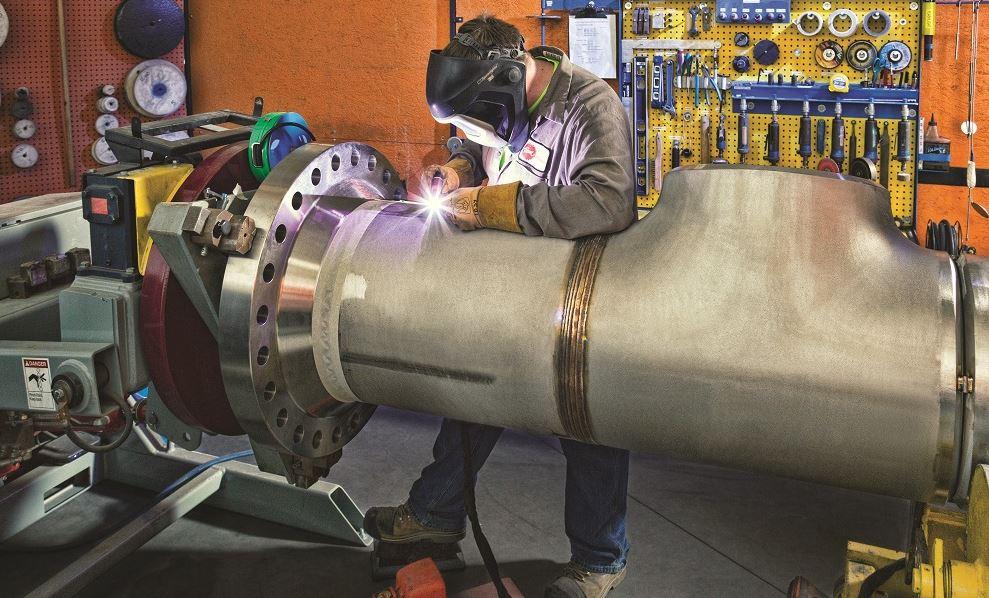
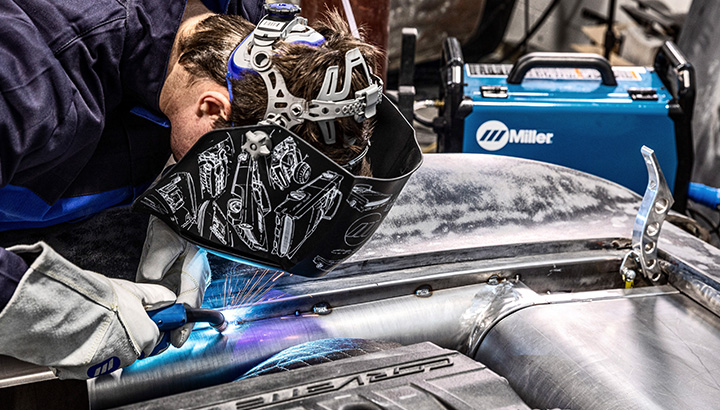

Speed level: ★★★★★
Why it’s fast:
- Continuous wire feed (no stops to change electrodes)
- Minimal cleanup required
- Easy arc starting and control
- Suitable for automation and robotic welding
Best for:
- Production and fabrication work
- Automotive manufacturing
- Sheet metal and medium-thickness steel
👉 One of the fastest manual welding processes.
2. Flux-Cored Arc Welding (FCAW) — High Deposition Speed
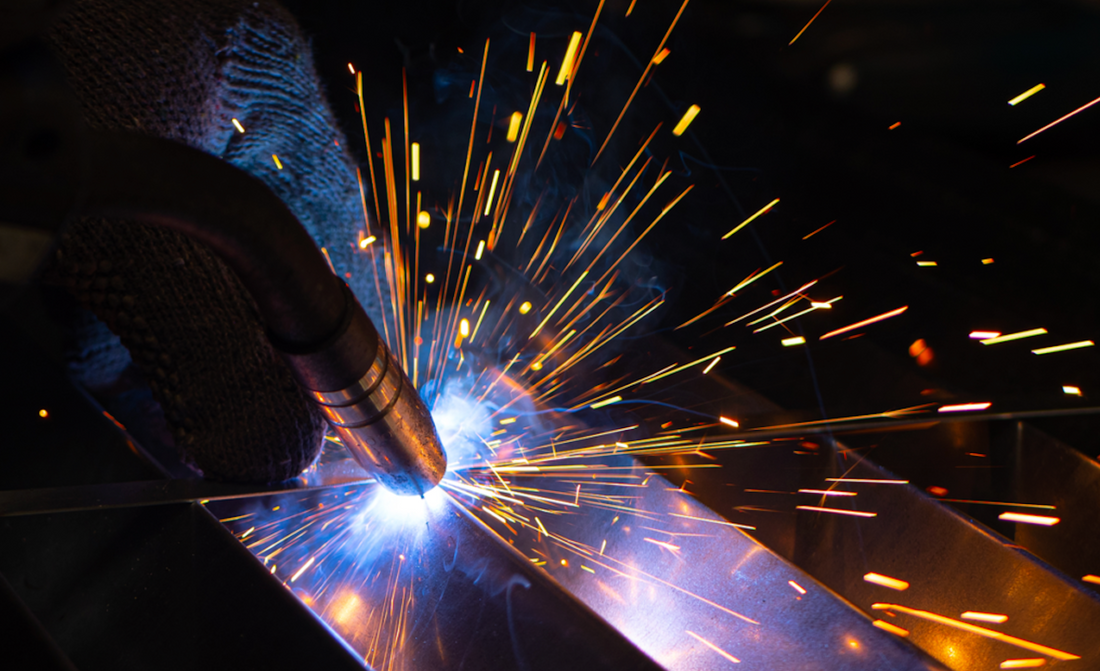
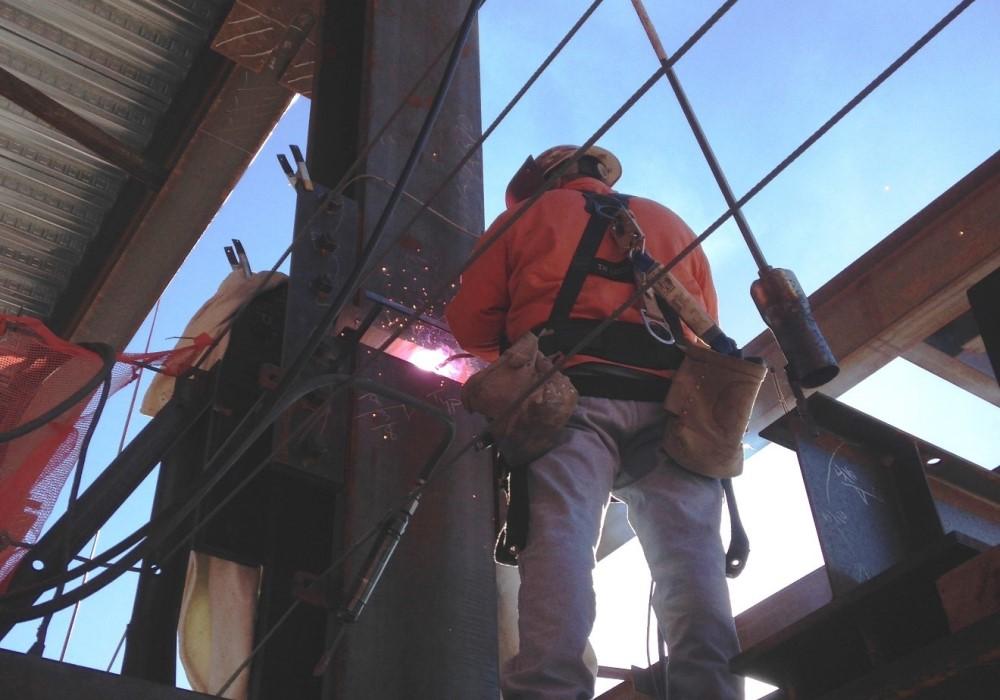
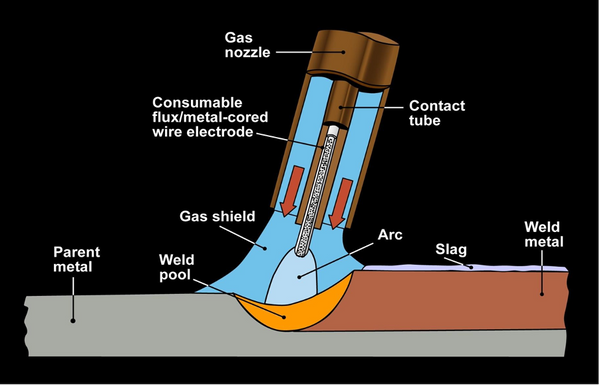
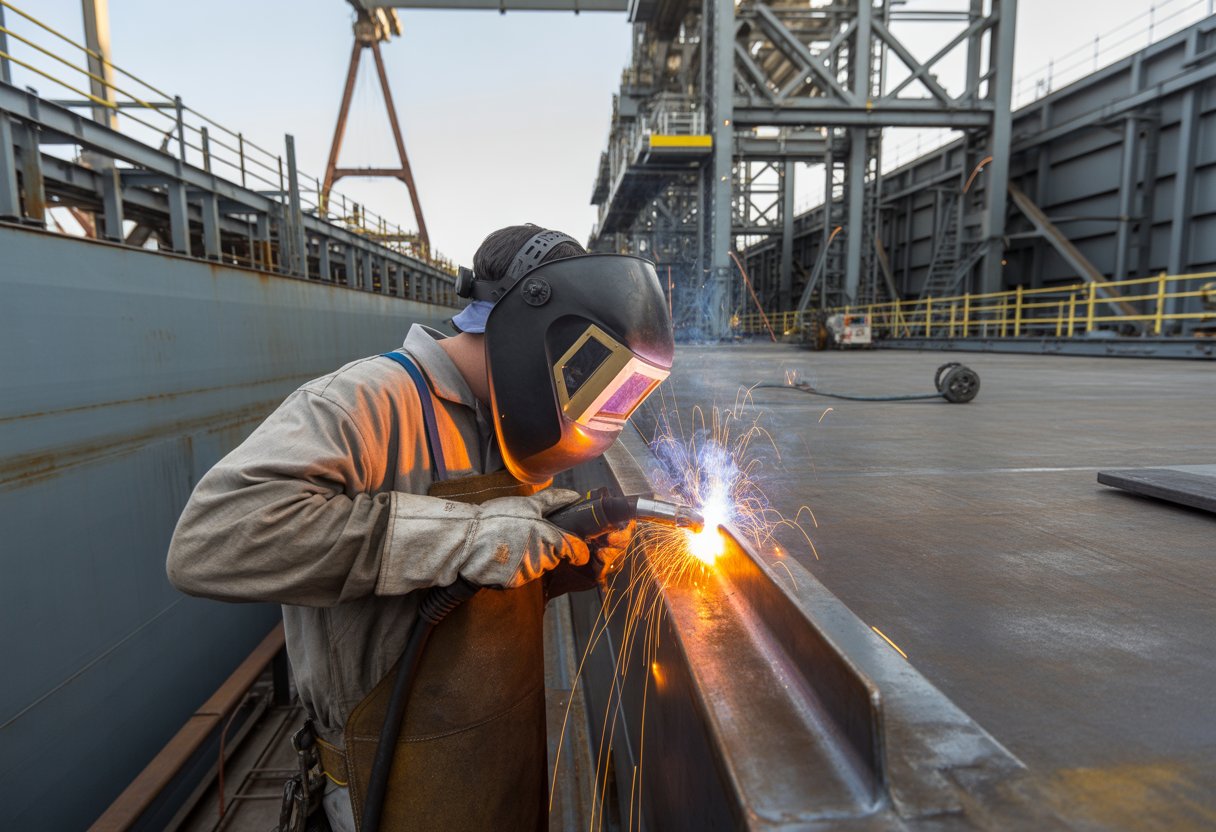
Speed level: ★★★★★
Advantages:
- High deposition rate
- Excellent for thick materials
- Performs well outdoors
- Deep penetration reduces multiple passes
Best for:
- Structural steel
- Shipbuilding
- Heavy construction
👉 Faster than MIG in heavy-duty applications.
3. Submerged Arc Welding (SAW) — Industrial High-Speed Welding
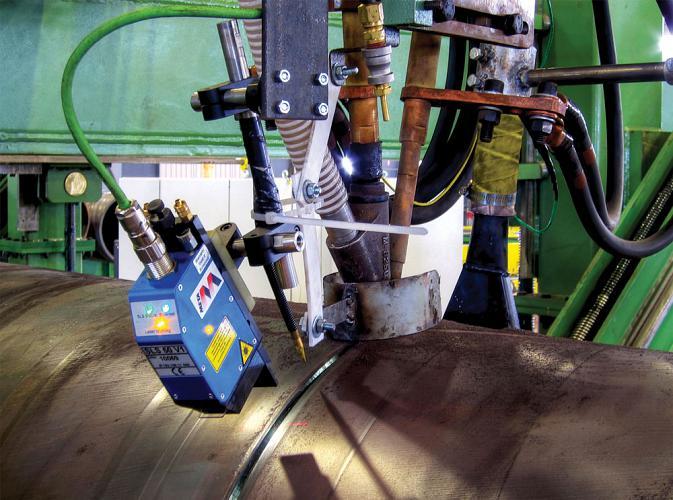
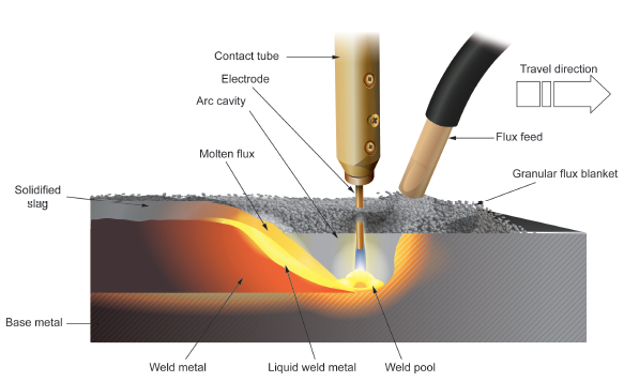

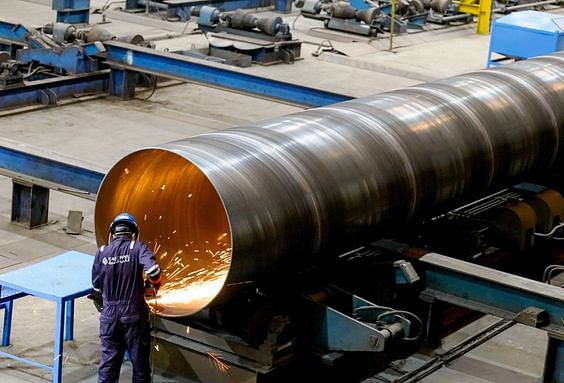
Speed level: ★★★★★ (industrial automation)
Why it’s extremely fast:
- Automated process
- Continuous welding with deep penetration
- Minimal arc exposure and spatter
Best for:
- Large-scale fabrication
- Pressure vessels and pipelines
- Shipbuilding and heavy industry
👉 Among the fastest welding methods in industrial production.
4. Stick Welding (SMAW) — Moderate Speed
Speed level: ★★★☆☆
Limitations:
- Stops required to change electrodes
- Slag removal between passes
- Slower deposition rate
Best for: outdoor repairs and structural work.
5. TIG Welding (GTAW) — Slow but Precise
Speed level: ★★☆☆☆
Why it’s slower:
- Manual filler addition
- Focus on precision and control
- Lower deposition rate
Best for: high-quality, precision welds.
Speed Comparison
| Welding Process | Speed | Best Use |
|---|---|---|
| MIG (GMAW) | Very Fast | Production & fabrication |
| FCAW | Very Fast | Heavy steel & construction |
| SAW | Extremely Fast | Industrial automation |
| Stick (SMAW) | Moderate | Outdoor & repair work |
| TIG (GTAW) | Slow | Precision welding |
Factors That Affect Welding Speed
Welding speed depends on:
✔ Material thickness
✔ Joint design and position
✔ Welder skill and technique
✔ Equipment setup and automation
✔ Required weld quality
Faster methods may sacrifice precision, while slower methods improve quality.
Summary
The fastest welding processes include MIG welding and Flux-Cored Arc Welding, both offering high deposition rates and efficient operation. In industrial settings, Submerged Arc Welding (SAW) is among the fastest due to automation and deep penetration.
While TIG welding provides superior precision, it is slower, and stick welding offers moderate speed. The best choice depends on production needs, material thickness, and weld quality requirements.