Understanding the Four Types of Welders
MIG, TIG, Stick and Flux-Cored welders each have different strengths. Learn how these welding processes work, where they are used and how to choose the right equipment for steel fabrication projects.

Why Understanding Welder Types Matters
Welding plays an important role in construction, fabrication, manufacturing, repair work and many industrial applications. Choosing the correct welding process can affect weld quality, productivity, material compatibility and the final result.
The four welding types covered in the reference article are MIG, TIG, Stick and Flux-Cored welding. Each process is designed for different working conditions and applications.
Understanding these differences makes it easier to select suitable equipment for steel fabrication and repair projects.
- Understand how each welding process works
- Compare applications and advantages
- Identify suitable working environments
- Match welding equipment to the project
- Improve welding planning and productivity
Four Types of Welders Explained
MIG, TIG, Stick and Flux-Cored welders use different electrode, shielding and operating methods. Understanding their characteristics helps determine which process fits a particular steel project.
MIG Welders
MIG stands for Metal Inert Gas welding. MIG welders use a continuously fed wire electrode and shielding gas to protect the molten weld pool from contamination.
- Continuous wire-feed electrode
- Fast welding process
- Relatively user-friendly operation
- Suitable for fabrication
- Common in automotive applications
TIG Welders
TIG stands for Tungsten Inert Gas welding. It uses a non-consumable tungsten electrode and may use a separate filler rod when additional material is required.
- High level of precision
- Excellent control
- Suitable for detailed work
- Useful for thin materials
- High-quality weld appearance
Stick Welders
Stick welding, also called Shielded Metal Arc Welding or SMAW, uses a consumable electrode that melts during the welding process.
- Robust welding method
- Suitable for outdoor work
- Useful for heavy fabrication
- Suitable for repair work
- Performs well in challenging conditions
Flux-Cored Welders
Flux-Cored welding operates similarly to MIG but uses a tubular wire containing flux. Depending on the process, the flux can help create shielding during welding.
- Tubular flux-filled wire
- Useful for outdoor work
- Suitable for construction
- Effective for thicker materials
- Practical for demanding applications
MIG vs TIG vs Stick vs Flux-Cored Welding
Use this comparison as a starting point when determining which welding process may be appropriate for your project.
| Feature | MIG | TIG | Stick | Flux-Cored |
|---|---|---|---|---|
| Electrode | Continuous wire | Non-consumable tungsten | Consumable electrode | Tubular flux-filled wire |
| Main Strength | Speed | Precision | Robustness | Outdoor versatility |
| Skill Level | Beginner-friendly | Higher skill requirement | Requires practice | Moderate to advanced |
| Typical Applications | Manufacturing & automotive | Precision & thin materials | Heavy fabrication & repair | Construction & thick materials |
| Outdoor Suitability | Moderate | Requires controlled conditions | Excellent | Excellent |
Explore the Four Welding Processes
Each welding process has a particular role in steel fabrication, construction, repair and industrial work.


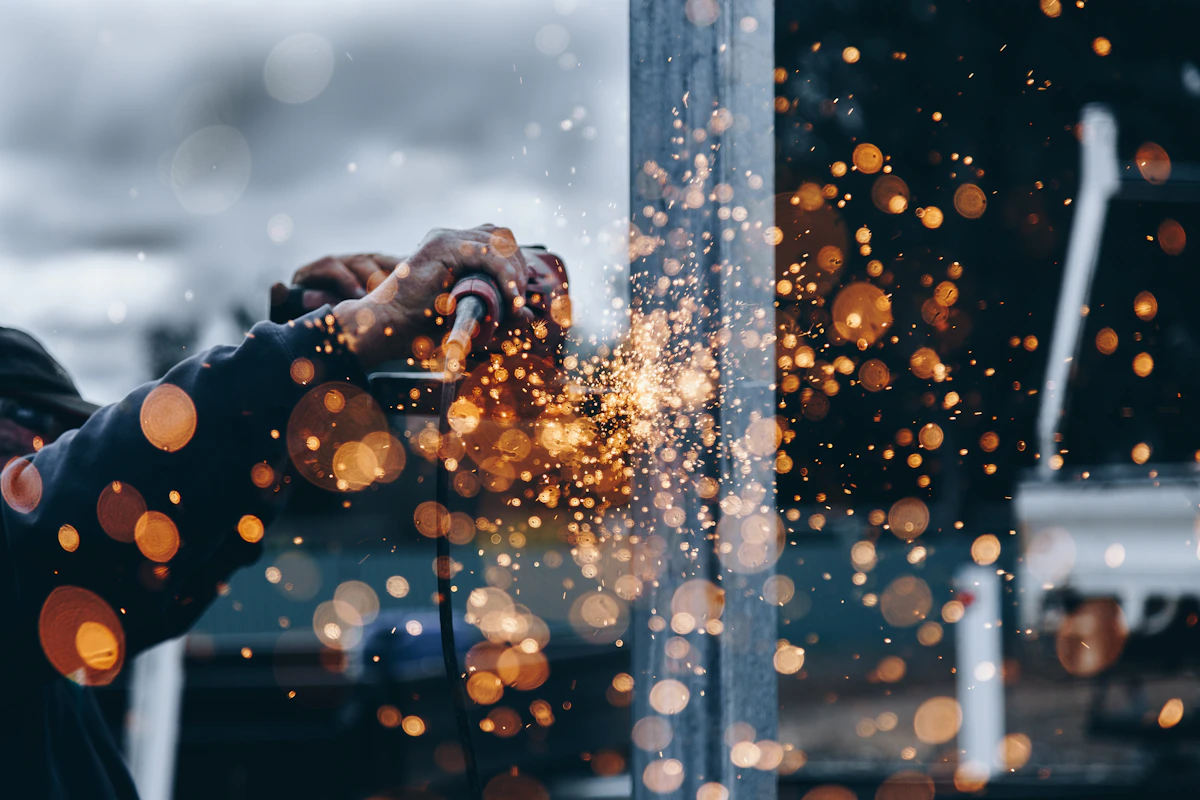
MIG Welders: Fast, Versatile and User-Friendly
MIG welding is one of the most widely recognized welding processes. It uses a continuous wire-feed electrode and shielding gas to protect the molten weld area.
Its relatively user-friendly operation makes it a practical option for beginners while its speed and versatility make it useful in manufacturing and automotive work.
- Best suited for: Fabrication, manufacturing and automotive applications.
- Main advantage: Continuous wire feed can support efficient welding.
- Important consideration: Shielding gas and appropriate settings are required for the intended application.
TIG Welders: Precision for High-Quality Results
TIG welding uses a non-consumable tungsten electrode and can use a separate filler rod when required. It offers excellent control over the welding process.
TIG is particularly useful when appearance and weld quality are important, including detailed work and applications involving thin materials.
- Best suited for: Precision work and applications where appearance matters.
- Main advantage: Excellent control over the weld.
- Important consideration: TIG generally requires greater operator skill and concentration.

Stick Welders: Reliable for Heavy and Outdoor Work
Stick welding, also known as Shielded Metal Arc Welding or SMAW, uses a consumable electrode that melts during the welding process.
Its robust characteristics make it suitable for heavy fabrication, repair work and outdoor applications.
- Best suited for: Heavy metal fabrication and repair.
- Main advantage: Robust performance in demanding environments.
- Outdoor benefit: It can be practical in windy and less-controlled conditions.
Flux-Cored Welders: Practical for Construction and Outdoor Jobs
Flux-Cored welding uses a special tubular wire filled with flux. It operates similarly to MIG but has characteristics that make it useful for demanding outdoor applications.
It is frequently associated with construction and thicker materials where portability, productivity and outdoor suitability are important.
- Best suited for: Construction and thicker steel applications.
- Main advantage: Useful in outdoor and windy working conditions.
- Important consideration: Select the appropriate flux-cored process and consumable for the material and project.

Where Are the Four Types of Welders Used?
The appropriate welding process depends on the material, project requirements, environment and desired result.
7 Factors to Consider Before Selecting Welding Equipment
Choosing a welder should be based on the actual project rather than simply selecting the most powerful machine available.
Material Type
Identify whether the project involves mild steel, stainless steel or another material and select the welding process accordingly.
Material Thickness
Thin sheet and heavy steel can require different welding approaches, settings and equipment.
Required Finish
Consider whether the project prioritizes appearance, precision, speed or structural strength.
Working Environment
Indoor workshop work and outdoor construction projects can have very different welding requirements.
Operator Skill
Some welding processes are easier to learn while others require significant control and experience.
Project Scale
A small repair, fabrication job and large construction project can require different welding equipment.
Safety & Setup
Appropriate protective equipment, ventilation, power supply and safe operating procedures are essential.
Professional Welding & Steel Fabrication in Delhi NCR
Selecting the right welding process is only one part of a successful steel fabrication project. Proper material preparation, joint design, welding technique and finishing are equally important.
Steel Iron Fabrication serves requirements in New Delhi, Chhatarpur and surrounding Delhi NCR locations, including projects involving steel welding, metal fabrication, structural work, gates, railings and repairs.
Whether the project requires MIG, TIG, Stick or Flux-Cored welding, the process should be selected according to the material and intended application.
- Steel welding
- MS welding
- Metal fabrication
- Gate and railing fabrication
- Structural steel work
- Welding repair services
Need the Right Welding Process for Your Project?
Share your material, dimensions, project type and location to discuss a suitable welding or steel fabrication solution in Delhi NCR.
Discuss Your ProjectDiscuss Your Welding Requirement
Contact Steel Iron Fabrication for welding and steel fabrication requirements across New Delhi and Delhi NCR.
Request a Welding Quote
Four Types of Welders FAQs
Common questions about MIG, TIG, Stick and Flux-Cored welding.
What are the four main types of welders?
The four types covered in this guide are MIG welders, TIG welders, Stick welders and Flux-Cored welders.
What is a MIG welder used for?
MIG welders use a continuous wire-feed electrode and shielding gas. They are widely used in manufacturing, fabrication and automotive work because of their speed and versatility.
What is TIG welding best for?
TIG welding is suited to applications where precision, appearance and weld quality are important. It can be particularly useful for thin materials and detailed work.
What is Stick welding used for?
Stick welding, also known as SMAW, is commonly used for heavy fabrication and repair work. It is also practical for many outdoor welding applications.
What is Flux-Cored welding?
Flux-Cored welding uses tubular wire containing flux. It can be useful for construction, outdoor applications and thicker materials.
Which welder is best for steel fabrication?
There is no single best welder for every steel project. MIG, TIG, Stick and Flux-Cored welding each have different strengths. The appropriate choice depends on steel type, thickness, working environment, required finish and project requirements.
Introduction to Welding Types
Welding plays a crucial role in various industries, connecting materials securely and facilitating construction. Among the several techniques and processes involved, understanding the different types of welders is essential for efficient and safe operations. In this post, we will delve into the four primary types of welders commonly used in the field.
MIG Welders
MIG (Metal Inert Gas) welders are known for their user-friendly operation. This type of welder uses a continuous wire feed as the electrode and an inert gas shield to protect the molten weld pool from contamination. MIG welding is ideal for beginners and is widely used in manufacturing and automotive work due to its speed and versatility.
TIG Welders
TIG (Tungsten Inert Gas) welders, on the other hand, require more skill and precision. They utilize a non-consumable tungsten electrode and a filler rod, if needed, to create a strong, high-quality weld. TIG welding is favored in applications where aesthetics and weld quality are paramount, such as in thin materials and artistic designs. This method is popular in aerospace and automotive industries.
Stick Welders
Stick welding, or SMAW (Shielded Metal Arc Welding), is one of the oldest welding techniques. It employs a consumable electrode that melts while creating a weld. This type of welder is robust and can work in various environments, making it suitable for outdoor tasks. Stick welding is generally used for heavy metal fabrication and repair tasks because it provides excellent penetration and stability in windy or contaminated conditions.
Flux-Cored Welders
Lastly, flux-cored welders operate similarly to MIG but use a special tubular wire filled with flux. This type creates its shielding gas during the welding process, making it advantageous for outdoor and windy situations. Flux-cored welding is often used for thick materials and in construction jobs where portability and efficiency are key considerations.
Conclusion
In conclusion, each type of welder serves unique purposes and applications. Whether you choose MIG, TIG, Stick, or Flux-Cored welding, understanding these differences will help you select the right equipment for your projects. Equip yourself with the appropriate knowledge and skills, and you will see great results in your welding endeavors.